vest has been completed, the untilled field naturally becomes a
habitat for wildlife. “No-till relies on natural processes to break
down residue from the previous crop,”
29
says Brian Scott, a farm-
er from northwestern Indiana who uses the no-till approach on his
farm. Scott adds that when it is time to plant, he uses machinery
that sweeps the residue out of the way so seeds can be placed in
furrows but does not create any trenches in the soil.
Another farmer who believes strongly in no-till farming is Carl
R. Mattson, who owns the sprawling Mattson Farms in Chester,
Montana. He is a staunch supporter of sustainable farming and
was one of the first farmers in Montana to adopt the no-till meth-
od. Mattson switched to the practice in 1993 primarily for soil
conservation but learned over time that no-till farming also helps
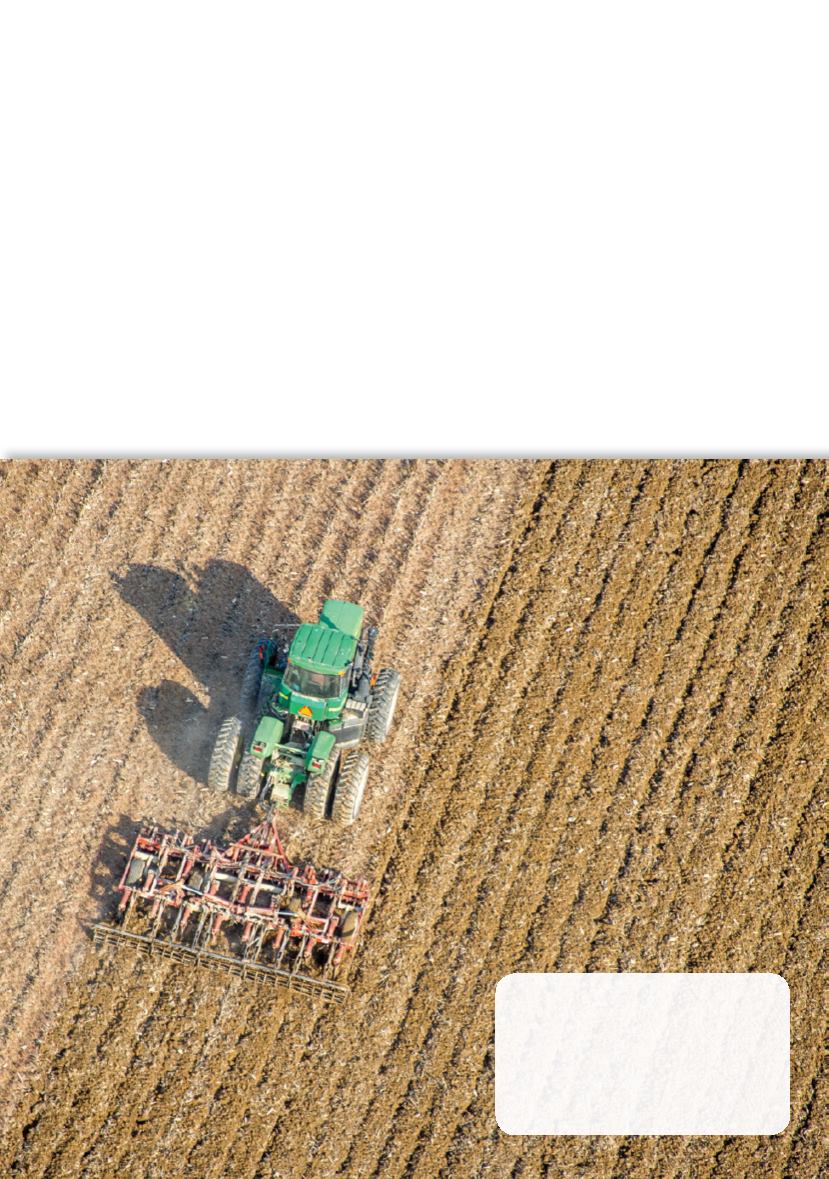
A farmer in Maryland tills his eld
in preparation for the next crops.
Some farmers have begun using no-
till farming; they say it improves soil
quality, does a better job of retaining
water, and reduces erosion.


