40
they put down would one day become the perfect nesting habitat
for terrapins,”
39
says wildlife biologist Laura Francoeur.
This annual terrapin crossing is a familiar and expected event
for Francoeur and other wildlife professionals who have been res-
cuing turtles from the JFK runway for years. Whenever one is
spotted, flights are delayed until the turtle is removed from the
runway. “Anything can be a hazard to aircraft, even turtles,”
40
says
Francoeur. Once the creatures are captured, they are measured,
their shells are marked, and they are electronically tagged for
identification. Then they are taken away and released somewhere
they can safely nest.
The Port Authority of New York & New Jersey, which manages
the airport property, installed plastic barriers to keep the turtles off
the runway. Although it helped cut down on the trespassing ter-
rapins, the barriers have not stopped their migration completely.
During June and July 2016, more than five hundred females were
captured, processed, and released into the wild.
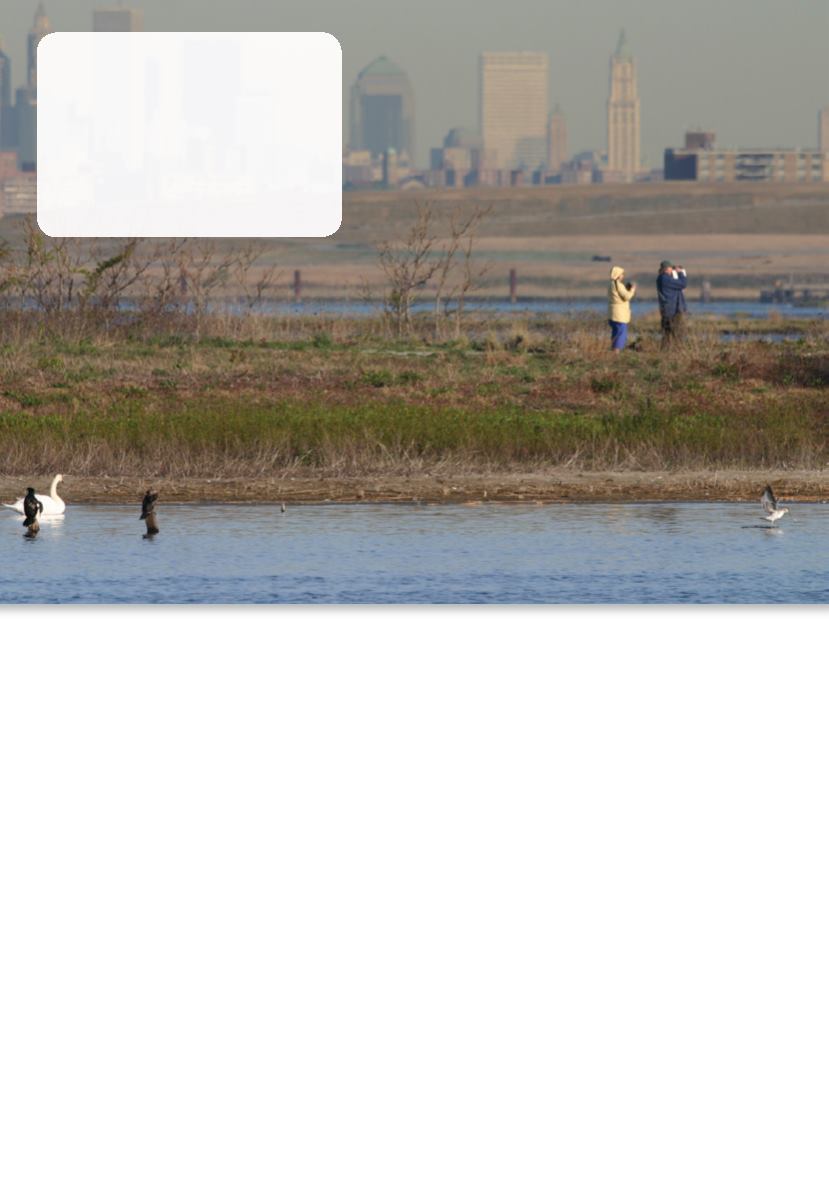
The Jamaica Bay Wildlife Refuge,
within view of New York City, offers
a place of serenity for people and
wildlife. Airport construction and
other development destroyed much of
the natural wetlands. The remainder
has been preserved as habitat that is
now teeming with diverse wildlife.


